Quick answer: Air duct sealing in Phoenix is the process of closing leaks, gaps, and disconnected joints in your home’s ductwork so your cooled air actually reaches your rooms instead of leaking into your hot attic. In a typical home, ENERGY STAR reports that 20 to 30 percent of the air moving through the duct system is lost to leaks. In the Phoenix Valley, where attic temperatures can exceed 140°F in summer, those leaks translate directly into sky-high electric bills, rooms that never cool, and an AC that runs nonstop. Sealing the leaks with mastic and metal-backed tape restores airflow, lowers your APS or SRP bill, reduces dust, and improves indoor air quality and safety.
In homes with forced-air cooling, a network of ducts carries conditioned air from your air handler to every room, then returns it to be cooled again. When those ducts develop leaks at their seams, connections, and register boots, the air you paid to cool escapes before it ever reaches you, often straight into a superheated Arizona attic. Air duct sealing is the targeted repair of those leaks, typically using a brush-applied mastic sealant, fiberglass mesh at larger gaps, and metal foil tape at joints, followed by insulating the ducts that run through unconditioned spaces.
The scale of the problem is larger than most Phoenix homeowners realize. ENERGY STAR estimates that 20 to 30 percent of the air moving through a typical duct system is lost due to leaks, holes, and poorly connected ducts. The U.S. Department of Energy puts it similarly, noting that air loss through ducts can account for roughly 30 percent of a cooling system’s energy consumption, and that ducts leaking into an attic or crawlspace can add hundreds of dollars a year to heating and cooling bills. In a climate like Phoenix, where cooling season stretches from April into October and central air runs for months on end, nearly a third of every dollar you spend cooling your home can be leaking into your attic.
Duct sealing is important everywhere, but the Phoenix Valley makes it critical. Most Arizona homes route their ductwork through the attic, which is the single worst place for a leak. During a Phoenix summer, attic temperatures routinely climb well past 130°F to 150°F. Every leak in an attic duct does two damaging things at once: it lets your expensive cooled air escape into that oven, and it can pull that 140-degree attic air back into the return side of your system, forcing your AC to cool the same hot air over and over.
That’s why duct leakage shows up so aggressively on Phoenix-area energy bills, and why local homeowners consistently report dramatic improvements after sealing. It’s also why utilities like APS and SRP offer rebates for duct sealing and home energy improvements: reducing that waste eases summer grid demand across the Valley.
It’s worth grounding this in what actual homeowners experience, because the symptoms of duct leakage are remarkably consistent across real projects here in the Valley. Reviewing homeowner accounts of duct-sealing work, the same handful of complaints appear again and again: rooms that simply would not get comfortable, an air conditioner that ran constantly without keeping up, noticeably dusty homes, and electric bills that kept climbing through the summer.
One recurring story is the room that never cools. Homeowners describe a back bedroom, an addition, or an upstairs room that stayed hot no matter where they set the thermostat. The fix wasn’t always just sealing, either. In one project, the contractor sealed some ducts, completely replaced others that were beyond repair, and even added an entirely new duct run and return line to a room that had been starved of airflow. In another, a homeowner reported that after the work, the house “stayed a cool 78 degrees all day,” something that hadn’t happened since they moved in, in a climate where that consistency is everything.
A second common theme is dust and air quality. One homeowner specifically noted having far less dust and dirt in the house after the ductwork was sealed. This tracks with the building science: unsealed return ducts pull in dusty, unfiltered air from the attic and distribute it throughout the home, and in dusty desert conditions that effect is amplified.
A third theme is the combination problem so common in older Phoenix and Mesa homes: little or no attic insulation paired with leaky ducts, producing brutal summer bills and poor comfort together. Many homeowners resolved this by having ducts sealed at the same time as attic insulation was added, and consistently reported feeling the difference immediately and seeing lower bills afterward. A detail worth emphasizing, mentioned repeatedly in positive experiences, is that reputable contractors document the work with before-and-after photos of the ducts, so homeowners can actually see the leaks that were closed. If you take one practical tip from this section, make it that one: always ask for before-and-after photos.
This is the section most homeowners are searching for, so here are the warning signs that you may have air duct leaks in your Phoenix home. These are drawn from ENERGY STAR’s guidance on identifying poorly performing ducts, combined with the patterns Valley homeowners describe.
You likely have duct leaks if you recognize several of the following:
If several of these describe your home, a professional duct assessment is warranted. In Phoenix, the combination of attic ductwork plus any comfort or bill complaint is a strong indicator that sealing will pay off.
Duct sealing is usually framed as an energy and comfort upgrade, but there’s a safety dimension that deserves attention. ENERGY STAR notes that during normal operation, gas appliances such as water heaters, clothes dryers, and furnaces release combustion gases, including carbon monoxide, through their ventilation systems. Leaky ductwork can cause backdrafting, a condition where those gases get drawn back into the living space instead of being expelled outdoors. Sealing duct leaks helps minimize this risk.
On the air quality side, ENERGY STAR explains that fumes from household and garden chemicals, insulation particles, and dust can enter an unsealed duct system and aggravate asthma and allergy problems. Sealing the ducts reduces the pathways for these pollutants to enter and circulate. This is the technical explanation behind the “much less dust” outcome that Phoenix homeowners describe after a sealing project, and it’s a meaningful benefit for households with allergy or asthma sufferers, not just for the energy savings.
Understanding the process helps you evaluate contractor quotes and recognize quality work.
Inspection and assessment. A quality project begins with an inspection of the accessible ductwork, usually in the attic or garage. The technician looks for disconnected joints, gaps at connections, crushed flex duct, and leaks where ducts meet register boots at the floors, walls, and ceilings. ENERGY STAR specifically identifies the connections at vents and registers as common locations for leaks and disconnected ductwork. Many professionals also perform diagnostic testing to measure leakage before and after the work.
Sealing the leaks. The core of the job is sealing. The correct materials are mastic sealant, a thick paste brushed over seams and joints, often reinforced with fiberglass mesh tape at larger gaps, plus metal-backed foil tape. The Department of Energy notes that sealing ducts with fiberglass mesh and mastic can control humidity and dust. A critical point emphasized by ENERGY STAR is what not to use: never use ordinary cloth duct tape, because despite its name it is not long-lasting and will fail quickly, especially in the punishing heat of a Phoenix attic.
Repairing or replacing damaged sections. Sometimes sealing isn’t enough. As real projects show, badly deteriorated or undersized ducts may need to be replaced outright, and rooms with insufficient airflow may need a new supply run or return added. A thorough contractor will tell you honestly when a section is beyond sealing.
Insulating the ducts. After sealing, ducts running through the attic should be insulated so the conditioned air inside doesn’t lose energy to the surrounding 140-degree air. In Phoenix, sealing and insulating go hand in hand, and pairing both with adequate attic insulation delivers the biggest comfort and savings gains.
Verification. Good contractors document the work with before-and-after photos and, ideally, a post-sealing leakage test so you can see and measure the improvement.
ENERGY STAR acknowledges that some homeowners take on duct sealing as a do-it-yourself project. If you go this route, the guidance is to seal accessible leaks with mastic sealant or metal tape, insulate the ducts you can reach, and pay special attention to the connections at vents and registers.
That said, there are real limits to DIY, and they’re sharper in Phoenix. Professionals can access more of the system, use diagnostic equipment to find and quantify hidden leaks, and work safely in extreme attic conditions. Given that most heating and cooling contractors also repair ductwork, and that the real payback comes from sealing the leaks you can’t see, professional sealing is usually the better value for a whole-home result. Real homeowner accounts reinforce this, since the biggest comfort wins came from projects that combined sealing with repairs, added duct runs, and insulation, all of which are beyond a typical DIY scope.
Here’s a quick comparison to help you decide:
| Factor | DIY Duct Sealing | Professional Duct Sealing |
| Access to hidden ducts | Limited to what you can reach | Reaches most of the system |
| Leak detection | Visual only | Diagnostic testing available |
| Attic safety in AZ heat | Risky, heat-exposure hazard | Trained, equipped crews |
| Repairs & new duct runs | Not practical | Included as needed |
| Before/after documentation | None | Photos and leakage results |
| Rebate paperwork (APS/SRP) | Homeowner handles | Often handled by contractor |
| Best for | Minor accessible leaks | Whole-home results and savings |
According to ENERGY STAR, a well-designed and properly sealed duct system delivers benefits across four areas. For comfort, sealing and insulating ducts directly addresses rooms that are too hot in summer, exactly the complaint Phoenix homeowners voice most. For savings, leaky ducts can reduce cooling efficiency by as much as 20 percent, so sealing lowers your bills and can often pay for itself over time. For indoor air quality, sealing reduces the dust, particles, and fumes that enter and circulate through the system. And for safety, sealing reduces the backdrafting risk that can pull combustion gases into your living space.
There’s also a bonus benefit worth knowing if you’re planning a new AC system, which many Valley homeowners eventually face: ENERGY STAR notes that a well-sealed, well-designed duct system may let you install a smaller, less expensive unit that still delivers better dehumidification, because the system no longer has to oversize itself to compensate for losses.
Costs vary by home size, duct accessibility, and how much repair versus simple sealing is required. Rather than quote a single figure, the more useful framing is the payback: because sealing recovers 20 to 30 percent of otherwise-lost cooled air and can save hundreds of dollars a year according to the Department of Energy, the work often pays for itself in energy savings, and in a long Phoenix cooling season that payback tends to come faster than in milder climates.
Many Phoenix homeowners also qualify for utility rebates through APS and SRP for duct sealing and related home-energy improvements. Homeowners frequently mention their contractor handling the rebate paperwork on their behalf, which meaningfully reduces the net cost, so it’s worth asking any contractor whether current APS or SRP rebates apply to your project.
How do I know if my air ducts are leaking in my Phoenix home?
The most common signs are high summer electric bills, rooms that are hard to cool, stuffy rooms, excessive household dust, and ducts located in the attic or garage. Tangled or kinked flexible ducts are another indicator. If several apply, have your ducts professionally assessed.
How much cooled air is lost to duct leaks?
ENERGY STAR estimates that about 20 to 30 percent of the air moving through a typical duct system is lost to leaks, holes, and poor connections. The Department of Energy similarly attributes roughly 30 percent of a cooling system’s energy use to duct air loss.
Can duct sealing lower my APS or SRP bill?
Yes. Leaky ducts can reduce cooling efficiency by as much as 20 percent, so sealing restores that efficiency and lowers your bills. The DOE notes leaky attic ducts can add hundreds of dollars a year to cooling costs, an effect that’s especially pronounced during a Phoenix summer.
What material is used to seal air ducts?
Professionals use mastic sealant, often with fiberglass mesh at larger gaps, plus metal-backed foil tape. You should never use ordinary cloth duct tape, because it fails quickly, especially in extreme attic heat.
Does duct sealing help with dust and allergies?
Yes. Sealing reduces the entry of dust, insulation particles, and chemical fumes into the duct system, which improves indoor air quality. Phoenix homeowners frequently report noticeably less dust after sealing.
Is leaky ductwork a safety hazard?
It can be. Leaky ducts can cause backdrafting, where combustion gases like carbon monoxide from gas appliances are drawn back into the home instead of venting outside. Sealing minimizes this risk.
Should I seal my ducts myself or hire a Phoenix professional?
You can seal accessible ducts yourself with mastic or metal tape, but much of the system is hidden and Arizona attics are dangerously hot for much of the year. Professionals reach more of the system, use diagnostic tools, and can repair or replace damaged sections, which is why professional sealing typically delivers the best whole-home results.
Are there rebates for duct sealing in Phoenix?
Often, yes. Utilities such as APS and SRP have offered rebates for duct sealing and home-energy improvements. Ask your contractor whether current rebates apply and whether they’ll handle the paperwork.
Should I insulate my ducts too?
Yes. Ducts running through the attic should be insulated after sealing so the cooled air inside doesn’t lose energy to the surrounding heat, which is especially important in Phoenix’s extreme attic temperatures.
Air duct sealing addresses one of the most overlooked sources of energy waste and discomfort in a Phoenix home. With 20 to 30 percent of cooled air commonly lost to leaks, and Valley attics reaching 140°F or more, sealing delivers measurable improvements in comfort, lower summer bills, cleaner indoor air, and safer operation. The warning signs are consistent and easy to recognize: high bills, rooms that won’t cool, stuffy spaces, excess dust, and ducts running through the attic. The proper fix uses mastic and metal tape rather than cloth duct tape, often paired with duct insulation, section repairs, and attic insulation for the best result. If your home shows these symptoms, a professional duct assessment with before-and-after documentation is the smart first step toward a cooler, more affordable summer.
Sources: ENERGY STAR (Duct Sealing; Benefits of Duct Sealing) and the U.S. Department of Energy (Energy Saver guidance).
Related reading:
Schedule a free duct assessment with our Phoenix-area team. We’ll inspect your ductwork, show you before-and-after photos, and help you claim any available APS or SRP rebates.

About the Author — Nick Smith
Nick Smith is the Founder and CEO of Thermo S Insulation, a Phoenix-metro home energy company based in Mesa, Arizona, specializing in air duct sealing, attic insulation, and whole-home energy efficiency. With a background in business development and operations management and an education from Gateway Community College, Nick built Thermo S Insulation into one of Arizona’s top-rated insulation and duct-sealing providers, earning a 4.9-star reputation across hundreds of homeowner reviews. His teams are known for honest, transparent pricing, meticulous before-and-after documentation, and helping Valley homeowners lower their summer energy bills while improving comfort and indoor air quality. Nick and his crews are BPI-certified and A+ rated by the Better Business Bureau.





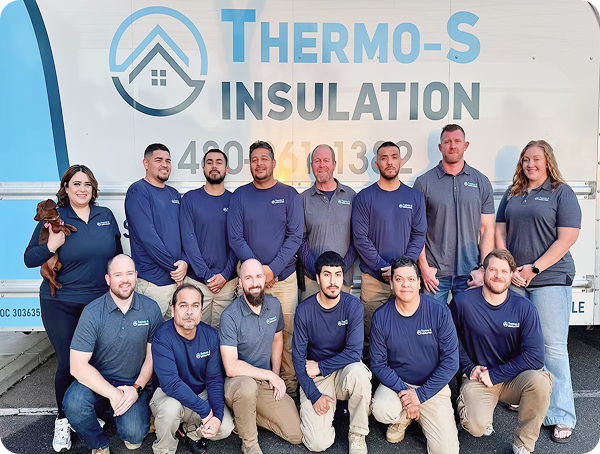
We promise to exceed your expectations by prioritizing exceptional customer service and building lasting relationships. Our commitment to quality workmanship, cleanliness, and comprehensive warranties sets us apart. Your satisfaction is our top priority!

Your home could qualify for significant energy savings through our test and repair program. The sooner you check, the sooner you start saving.