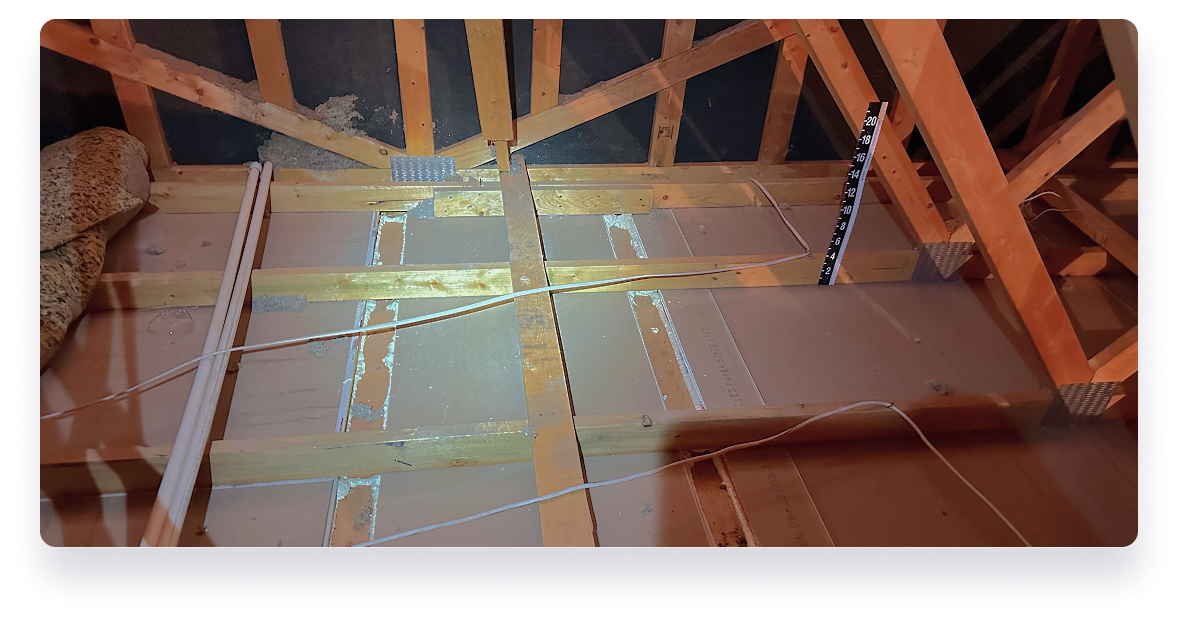
Quick answer: Attic air sealing is the process of closing the hidden gaps, cracks, and penetrations in your attic floor and ceiling that let conditioned air escape and outside air leak in. Done correctly—and paired with proper insulation—it can reduce heating and cooling costs by roughly 15% and dramatically improve year-round comfort. It is one of the most cost-effective energy upgrades a homeowner can make.
Attic air sealing means locating and closing every unintended opening between your living space and your attic, then verifying the work with diagnostic testing. These openings—around recessed lights, plumbing stacks, wiring, attic hatches, chimneys, and framing joints—act like tiny chimneys, constantly pulling expensive conditioned air up and out of your home while drawing unconditioned attic air back in.
Many homeowners assume that adding more insulation alone will solve high energy bills. It won’t. Insulation slows heat transfer, but it does nothing to stop air movement. If air is leaking through gaps, it flows right past and even through the insulation, undermining its performance. That’s why air sealing comes first and insulation second. As the ENERGY STAR program frames it, sealing and insulating work together as a system, and the U.S. Environmental Protection Agency estimates homeowners can save an average of 15% on heating and cooling costs by air sealing their homes and adding insulation.
In short: insulation resists heat; air sealing stops leaks. You need both, in that order.
Warm air rises. In winter, heated indoor air escapes through gaps at the top of your home, and cold air is pulled in through lower gaps to replace it—a continuous cycle called the stack effect. In summer, the process reverses as superheated attic air (which can exceed 130°F in hot climates) pushes down into your living space. Either way, your HVAC system runs longer and harder to keep up.
Sealing the attic breaks this cycle. Instead of paying to condition air that immediately leaks away, you keep the air you’ve already paid to heat or cool exactly where it belongs.
Attic air sealing delivers a compounding set of advantages:
Federal research underscores how much leakage is at stake. In Department of Energy trials of advanced aerosol envelope sealing across dozens of homes, sealing achieved an average leak reduction of about 47%—a striking illustration of how leaky the typical house really is before treatment.
To understand why this service matters, it helps to look at what actually drives homeowners to call an insulation contractor in the first place. Our analysis of over 600 hundred verified customer experiences and reviews reveals a remarkably consistent story.
The most common trigger was discomfort paired with rising utility costs—hot rooms in summer, uneven temperatures between floors, and HVAC systems that seemed to run constantly. In several cases, an inspection revealed the root cause: attic insulation levels were far too low and the home was leaking air. Homeowners described immediate, noticeable improvement in comfort once the work was completed.
Again and again, customers mentioned getting several quotes and feeling wary of being upsold or misled. One reviewer specifically praised a company that “didn’t try to upsell” and offered competitive pricing. Trust—not price alone—was the deciding factor for many.
Insulation and air-sealing work can be dusty and invasive. A repeated worry was whether crews would leave a mess behind.
The resolutions that earned five-star reviews map almost perfectly onto what a quality air-sealing and insulation project should include:
The lesson for any homeowner: the best outcomes come from contractors who diagnose before they sell, document their work, price transparently, and stand behind it.
A typical attic hides dozens of small openings. During a professional inspection, a technician locates and seals each source of air loss. The usual culprits include:
Sealing these points is what transforms insulation from underperforming to effective.
A quality air-sealing project follows a clear, verifiable sequence. This is the framework used by leading contractors and recommended by energy-efficiency authorities alike.
The critical detail most DIY guides miss is step four. Without before-and-after testing, there’s no way to know whether the work actually improved the home’s energy performance.
Because this distinction confuses so many homeowners, it deserves a direct explanation.
Insulation is a material—fiberglass batts, blown cellulose, or spray foam—rated by R-value, which measures resistance to conductive heat flow. Higher R-value means better resistance to heat passing through a surface.
Air sealing is not a material but an action: closing the pathways that let air physically move in and out of the home. No R-value can compensate for a gap that lets air stream straight through.
Think of it this way: insulation is a sweater, and air sealing is a windbreaker. A thick sweater keeps you warm on a still day, but on a windy one, air cuts right through it. You need the windbreaker to stop the air and the sweater to hold the warmth. A home needs both. This is exactly why experts insist on air sealing before adding insulation—sealing first ensures the insulation you pay for can actually do its job.
| Feature | Attic Air Sealing | Attic Insulation |
| What it is | An action: closing gaps, cracks, and penetrations that let air move in and out | A material: fiberglass, cellulose, or spray foam installed as a barrier |
| Problem it solves | Air movement (drafts, leaks, the stack effect) | Heat transfer through surfaces (conduction) |
| How it’s measured | Air changes per hour (ACH), verified by a blower door test | R-value (resistance to heat flow) |
| Primary materials | Caulk, expanding foam, rigid board, metal flashing, weatherstripping | Blown cellulose, fiberglass batts/blown-in, spray foam |
| Targets | Recessed lights, plumbing/wiring penetrations, attic hatch, flues, top plates | The open attic floor / ceiling plane |
| Analogy | The windbreaker that stops air cutting through | The sweater that holds warmth in |
| When it’s done | First — before insulation goes in | Second — after leaks are sealed |
| Works best when… | Paired with insulation | Paired with air sealing |
| Recommended target (hot climates) | Airtight seal confirmed by post-work re-test | R-38 to R-49 |
Key takeaway: Air sealing and insulation are not competing choices—they’re two halves of one system. Sealing stops the air; insulation slows the heat. For the best energy performance, do both, sealing first.
The most widely cited figure comes from the EPA: homeowners can save an average of 15% on heating and cooling costs—roughly 11% of total household energy costs—by air sealing and adding insulation. Actual savings depend on your climate, current leakage, existing insulation levels, and energy prices.
Beyond the utility-bill math, there are three additional financial angles worth considering:
Rebates and incentives. Many utilities offer rebates for air sealing, duct sealing, and insulation upgrades. In the customer experiences reviewed above, contractors handled the utility rebate paperwork directly, lowering the homeowner’s net cost—so always ask a contractor which local and federal incentives apply.
Equipment protection. A tighter envelope reduces HVAC runtime, delaying costly repairs and replacement.
Home value and comfort. Energy-efficient homes are increasingly attractive to buyers, and the day-to-day comfort improvement is something homeowners consistently rank as worth the investment on its own.
| Benefit | What It Means for You | Supporting Data / Source |
| Lower energy bills | Less conditioned air escapes, so HVAC runs less | ~15% avg. savings on heating & cooling (≈11% of total energy) — EPA / ENERGY STAR |
| Reduced air leakage | A measurably tighter home envelope | Up to ~47% avg. leak reduction in DOE aerosol-sealing trials |
| Consistent comfort | Fewer drafts and temperature swings between rooms | Reported as immediate improvement in verified customer reviews |
| Better air quality | Less dust, pollen, and attic particulate pulled indoors | ENERGY STAR seal-and-insulate guidance |
| Moisture control | Less condensation, lower mold/rot risk | Prevents humid air reaching cold attic surfaces |
| Longer HVAC life | Reduced runtime and system strain | Lower cycling extends equipment lifespan |
| Potential rebates | Lower net project cost | Utility rebates (e.g., SRP) often handled by contractor |
You may be a strong candidate for attic air sealing if you notice:
If several of these apply, a professional home energy audit is the logical next step.
Small, accessible tasks—weatherstripping an attic hatch, caulking an obvious gap—are reasonable do-it-yourself projects. But whole-attic air sealing generally warrants a professional for several reasons.
Professionals bring diagnostic equipment (blower doors and thermal cameras) that reveal hidden leaks the eye can’t find, and they can verify results with post-work testing. They also navigate safety hazards correctly: recessed lights need IC-rated airtight covers, and areas around chimneys and flues require fire-rated sealing to code. Finally, professionals know how to seal without accidentally blocking the intentional ventilation (like soffit-to-ridge airflow) that a healthy attic needs to manage moisture.
When choosing a contractor, look for the signals that correlate with strong outcomes: BPI certification, before-and-after pressure testing, transparent written quotes, photo documentation of completed work, help with available rebates, and a warranty on the work.
How long does attic air sealing take?
Most residential projects are completed in one to two days, depending on attic size, accessibility, and whether insulation is being removed and replaced at the same time.
Will air sealing make my attic too tight to breathe?
No. Air sealing targets the attic floor—the boundary between living space and attic. Proper attic ventilation (soffit and ridge vents) is preserved so the attic itself can still manage heat and moisture. A qualified contractor seals the leaks without compromising intentional ventilation.
Do I need to add insulation after air sealing?
In almost all cases, yes. Sealing and insulating are complementary. Sealing stops air movement; insulation slows heat transfer. For the best energy performance, do both, sealing first.
How much does attic air sealing cost?
Cost varies with home size, leak severity, and whether insulation work is included. Because rebates frequently apply, ask contractors for both the gross price and the net cost after available incentives.
Is attic air sealing worth it in a hot climate?
Yes. In hot regions, sealing prevents superheated attic air from infiltrating living spaces and reduces the summer cooling load—often bringing attics up to an R-38 to R-49 insulation level for maximum benefit.
Attic air sealing is one of the highest-return, lowest-drama improvements you can make to your home’s energy performance. It attacks the root cause of high bills and uneven comfort—uncontrolled air movement—rather than masking symptoms. Paired with proper insulation, it delivers meaningful savings (about 15% on heating and cooling per EPA estimates), a more comfortable and healthier home, and a longer-lasting HVAC system.
The homeowners who are happiest with the results share one thing in common: they chose a contractor who diagnosed the problem with real testing, sealed the leaks with the right materials, verified the improvement, documented the work, and priced it honestly. Whether you tackle a few small gaps yourself or bring in a certified professional for the full job, sealing your attic is a decision your comfort—and your utility bill—will thank you for.

About the Author — Nick Smith
Nick Smith is the Founder and CEO of Thermo S Insulation, a Phoenix-metro home energy company based in Mesa, Arizona, specializing in air duct sealing, attic insulation, and whole-home energy efficiency. With a background in business development and operations management and an education from Gateway Community College, Nick built Thermo S Insulation into one of Arizona’s top-rated insulation and duct-sealing providers, earning a 4.9-star reputation across hundreds of homeowner reviews. His teams are known for honest, transparent pricing, meticulous before-and-after documentation, and helping Valley homeowners lower their summer energy bills while improving comfort and indoor air quality. Nick and his crews are BPI-certified and A+ rated by the Better Business Bureau.





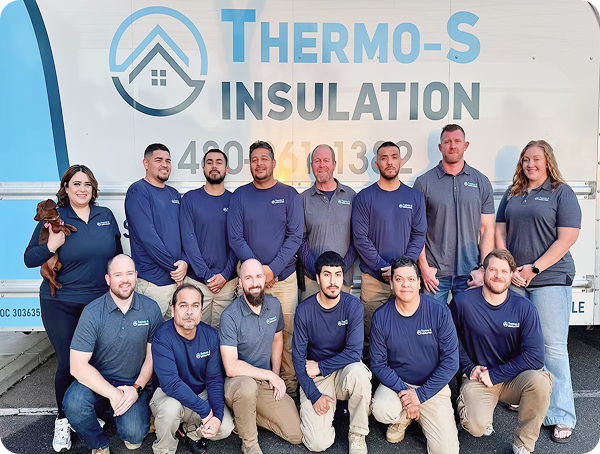
We promise to exceed your expectations by prioritizing exceptional customer service and building lasting relationships. Our commitment to quality workmanship, cleanliness, and comprehensive warranties sets us apart. Your satisfaction is our top priority!

Your home could qualify for significant energy savings through our test and repair program. The sooner you check, the sooner you start saving.